
Tuesday, April 19, 2011
The Price of War
In the video today you saw the great price paid by those in the North and South. The Civil War was a bloody war, with 618,000 lives lost. There were many changes that took place during this time that changed the way the war was fought. Discuss some of the technological changes that became a part of the war strategy. How did Lincoln use these to his advantage? 

Monday, April 18, 2011
North and South - Strengths and Weaknesses
As you read section 21.2 you learned about the strengths and weaknesses of the North and South at the start of the Civil War. Explain how you feel these strengths and weaknesses will play a role in each sides war strategy. Based upon what you have read, and what you know about previous American wars (Revolutionary War), who do you think should win the war?


Monday, April 4, 2011
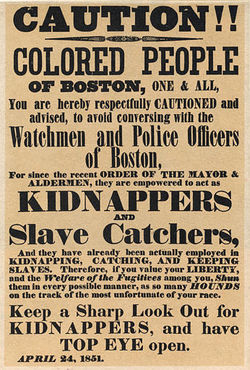
FUGITIVE SLAVE LAW
In your reading you can see that there were many issues facing the United States in the mid- 1800's. One of the controversies that had to be addressed was the issue of fugitive slaves. What is a fugitive slave? What did Southerners expect from Congress with regard to fugitive slave laws? How did the North react? What are your thoughts about the effectiveness of the laws? Were they justified?

Saturday, March 26, 2011
Modern Day Slavery
The question was raised, "Is there slavery in the modern world?" There are examples of child slavery, and slavery in Africa. However, there is also discussion about industries who pay their employees so poorly that it is the same as slavery.
Slavery does exist today despite the fact that it was prohibited by the 1948 Universal Declaration of Human Rights and the 1956 UN Supplementary Convention on the Abolition of Slavery, the Slave Trade and Institutions and Practices Similar to Slavery. Common characteristics distinguish slavery from other human rights violations. A slave is:
forced to work -- through mental or physical threat;
owned or controlled by an 'employer', usually through mental or physical abuse or threatened abuse;
dehumanised, treated as a commodity or bought and sold as 'property';
physically constrained or has restrictions placed on his/her freedom of movement. (www.antislavery.org) Are you surprised to learn that slavery continues today? Do you feel that we can ever truly abolish slavery in the world? Feel free to cite sources that you find, but be cautious, much of what I found was either a blog (opinion) or very out dated.
Slavery does exist today despite the fact that it was prohibited by the 1948 Universal Declaration of Human Rights and the 1956 UN Supplementary Convention on the Abolition of Slavery, the Slave Trade and Institutions and Practices Similar to Slavery. Common characteristics distinguish slavery from other human rights violations. A slave is:
forced to work -- through mental or physical threat;
owned or controlled by an 'employer', usually through mental or physical abuse or threatened abuse;
dehumanised, treated as a commodity or bought and sold as 'property';
physically constrained or has restrictions placed on his/her freedom of movement. (www.antislavery.org) Are you surprised to learn that slavery continues today? Do you feel that we can ever truly abolish slavery in the world? Feel free to cite sources that you find, but be cautious, much of what I found was either a blog (opinion) or very out dated.
Friday, February 18, 2011
LIFE OF A SLAVE

As we have discussed in class, plantation owners viewed slaves as property, something to be "worn out, not improved." Yet slave owners provided food, clothing, housing and medical care for their slaves. Why do you think they would provide all these things? How did providing basic needs allow masters to control the slaves? What does it mean when the plantation owners say slaves should "not be improved?"
Tuesday, February 8, 2011
QUILT SQUARES

In this chapter you will learn about what life was like for African Americans in the mid 1800's. Quilting and quilt squares were very important to them. Please consider the following questions: What practical purpose did the quilt squares serve? Why else would the squares be important to African Americans? The graphic organizer on page 257 shows the same person four times. Who do you think this person is and what do you think this indicates about slave life?
Thursday, February 3, 2011
Street Battle Over Arab Future

The New York Times article given to you in class updates you on the unrest in Egypt. On page two of the article it says, "The new generation, the generation of the Internet, is fearless." What do you think Shawki al-Qadi means by this quote? How is the "Internet generation" different than the ones before?
Tuesday, January 25, 2011
Women's Rights
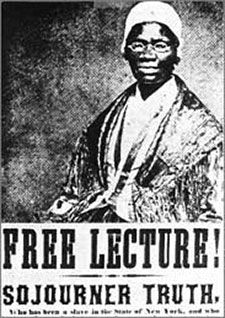
In the previous chapter we learned about Sacagawea and the Pioneer Women. In Chapter 18 you read about the women who were instrumental in the fight for equal rights for women. Compare the Pioneer Women to Elizabeth Cady Stanton, Lucretia Mott and Sojourner Truth. How were their lives the same, how were they different? Why do you feel that the 1840's was the time for a change in women's rights?
Monday, January 24, 2011
Division

Today you watched a video about the issues that divided our nation and ultimately led to the Civil War. What did you learn from the video? What surprised you? Shocked you? Made you think? Feel free to respond more than once, and use your reading to support your responses.
Saturday, January 15, 2011
Can one person make a difference?

In this chapter we will be learning about different reformations that occurred in the 1800's. Dorothea Dix worked hard to improve the conditions for the mentally ill. How did one person make such a difference?
Subscribe to:
Posts (Atom)